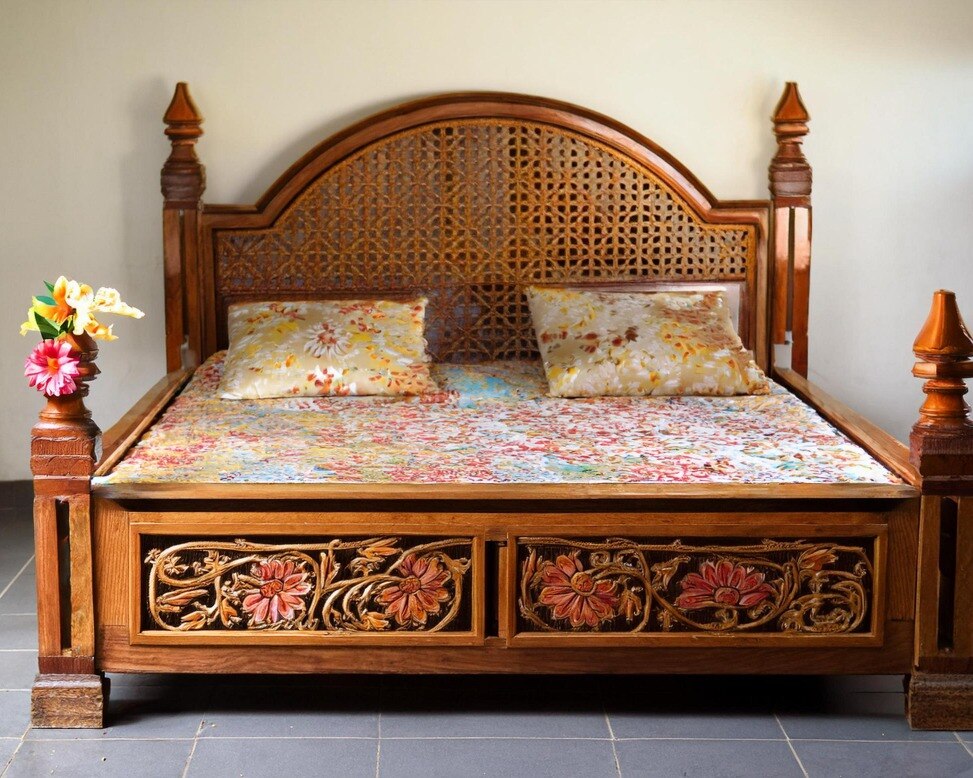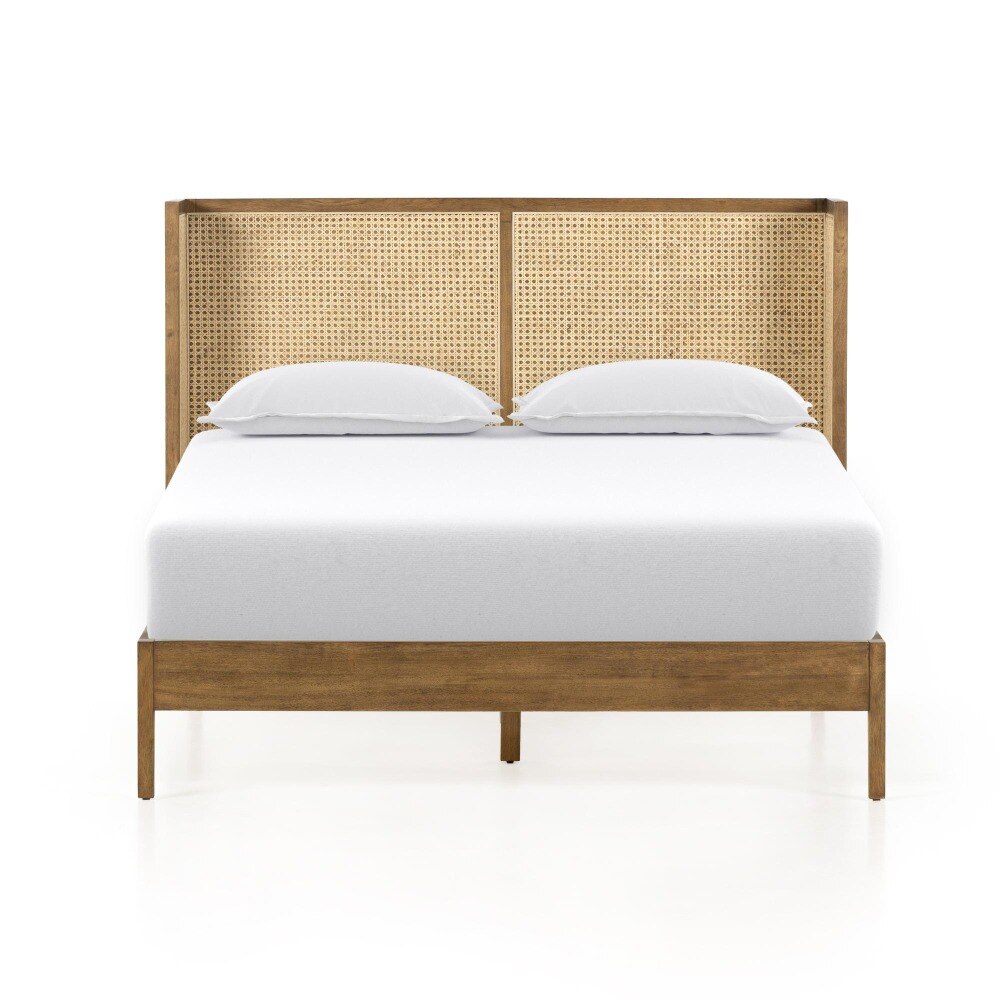
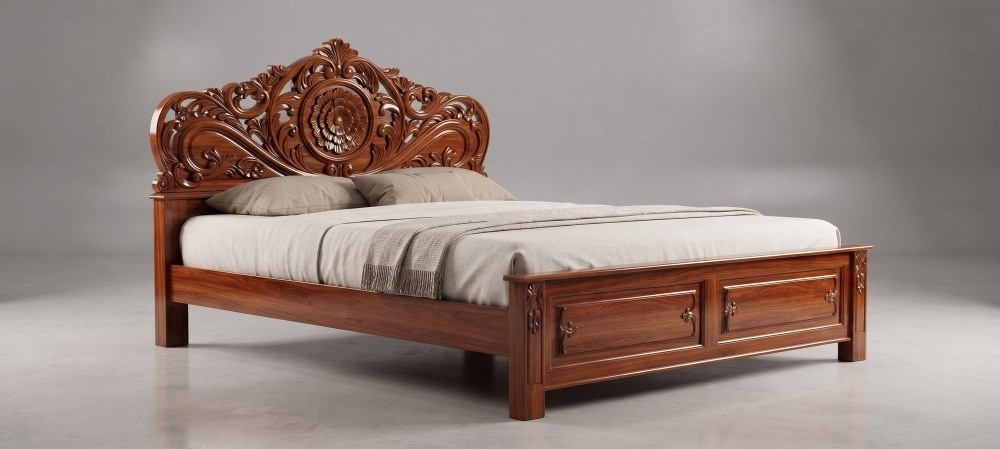
A teak bed is not made by cutting four rails to a mattress size and adding a finish. The result depends on timber moisture, accurate clearances, load-bearing joinery, movement allowances, and a workshop-to-bedroom installation check. By the end, you will know what to specify, inspect, and compare before approving a custom bed.
Key takeaways
- Give the maker your mattress’s exact length, width, and thickness.
- Request the teak’s source, moisture reading, and board photographs before approval.
- Check mortise-and-tenon joints, centre supports, and slat spacing for stability.
- Compare quotations by timber thickness, joinery, finish, delivery, and installation scope.
How a Pune maker turns your requirements into a teak-bed design
Before any teak board is cut, the maker turns your brief into measurements, drawings, and a moisture plan. The teak bed making process starts with your mattress’s actual length, width, and thickness—not a nominal king or queen label.
1. Confirm the use: indoor, sheltered outdoor, or semi-outdoor. Outdoor placement changes the finish, drainage, and corrosion-resistant hardware specification.
2. Measure the mattress, bedroom access, lift, staircase, and available floor area. Record the mattress clear opening, outside bed dimensions, floor clearance, and headboard height.
3. Prepare a component drawing and cut list covering side-rail height, headboard thickness, leg dimensions, centre-support layout, joinery, and hardware locations. This prevents a correctly sized mattress from ending up inside an unusable frame.
4. Inspect candidate boards for sapwood, knots, end splits, cracks, insect damage, cupping, and twisted edges. Reject boards whose defects would weaken rails, legs, or visible panels.
5. Check every board with a calibrated moisture meter, then condition the timber in the workshop before final sizing. A practical furniture target is about 8–12% moisture content, adjusted for the bedroom’s humidity and ventilation.
That conditioning step matters in Pune: inadequately seasoned teak can develop gaps, cupping, or loose joints after installation. A wide headboard or solid infill also needs room to move across the grain rather than being rigidly trapped.
For a custom teak wood bed in pune, approve the drawings, timber condition, finish intent, and hardware before fabrication begins. Changes after cutting cost time and usable timber.
How to verify that the bed is actually made from suitable teak
Ask for a written material schedule before fabrication. It must name solid teak, teak veneer, teak-faced engineered board, or mixed-species construction for every component. “Teak wood bed manufacturer in Pune” does not prove that the headboard, rails, and legs are all solid teak.
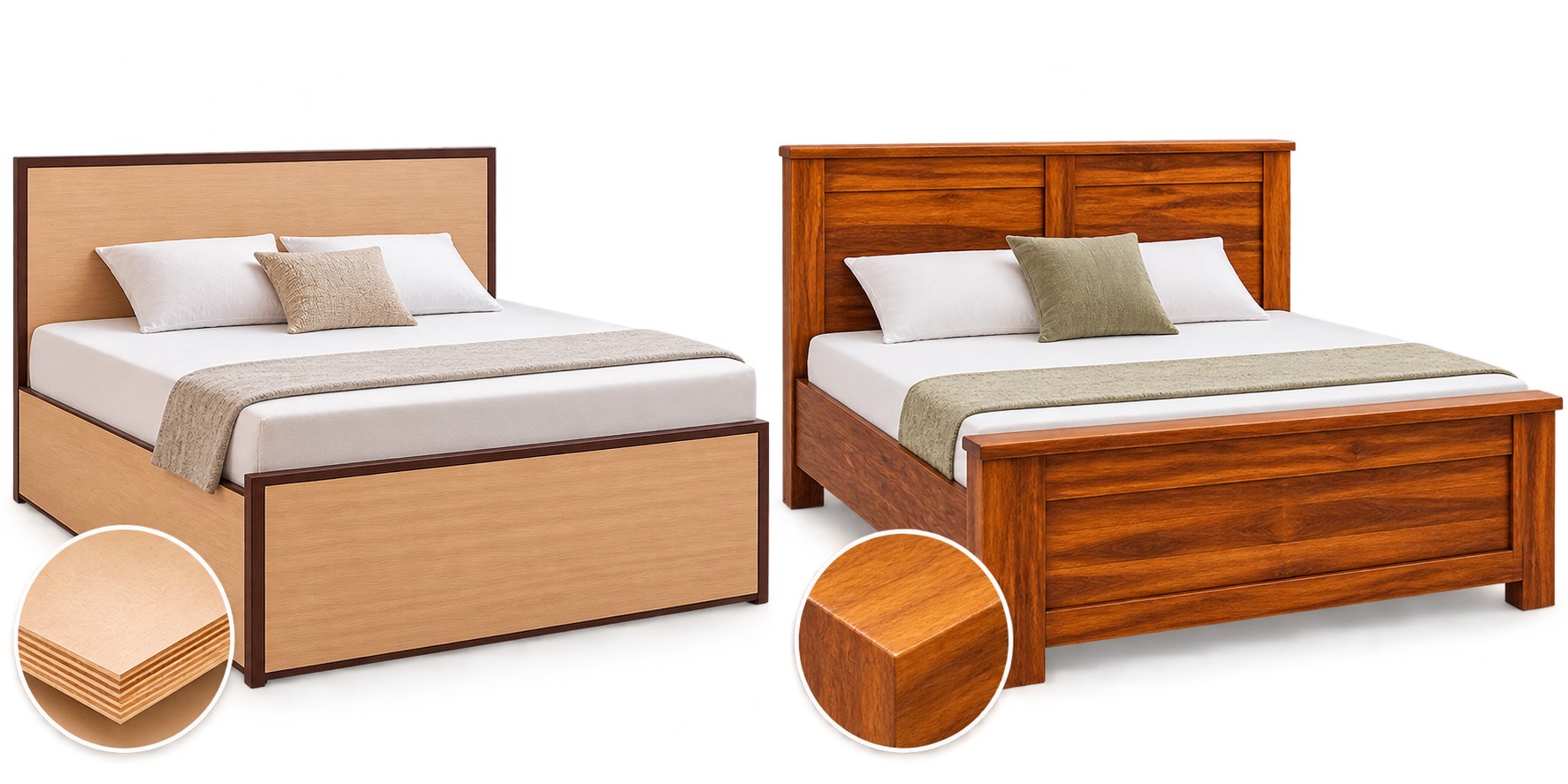
1. Inspect an unfinished edge or concealed drilling. Solid teak shows the same timber through its full thickness; veneer shows a thin face over plywood, MDF, or another substrate. Require the substrate, veneer thickness, edge treatment, and solid load-bearing members in writing.
2. Compare the grain on faces, edges, and adjoining parts. A painted or teak-coloured bed can hide rubberwood, mango wood, or another species. Colour, smell, and oily touch are clues, not proof; a sample or exposed section gives stronger evidence.
3. Request the teak’s stated grade, source, and drying method. Reject boards with deep cracks, end splits, active insect holes, severe cupping, or excessive sapwood where strength or appearance matters. Knots and mismatched grain deserve marking before cutting.
4. Ask the maker to measure boards with a calibrated moisture meter and record readings. A practical indoor furniture target is about 8–12% moisture content, adjusted for the bedroom’s humidity; inadequately seasoned timber can later open joints or cup.
5. Check wide headboard panels for narrow-board construction, floating panels, or movement gaps. Rigidly trapping one broad solid panel creates cracks as humidity changes.
A listing labelled “wooden furniture makers teak bed in Pune” is only a search description. The specification, exposed edges, timber records, and moisture readings establish what you are buying.
How joinery and support prevent movement, squeaks, and sagging
A heavy teak bed stays square, quiet, and level when its joints transfer weight through timber bearing surfaces rather than screws alone.
The teak wood bed for wooden furniture makers in Pune process is therefore a moisture-control and load-transfer exercise: inspect boards with a calibrated meter, condition them in the workshop, and target about 8–12% moisture content for typical interiors. Timber that is too wet can shrink, open joints, and warp after delivery.
The teak bed making process should define the mattress clear opening, rail height, leg size, floor clearance, headboard thickness, centre supports, and hardware positions before cutting. A nominal king-size label cannot prevent a poor fit.
| Construction detail | Better choice | Failure prevented |
|---|---|---|
| Side-rail connection | Housed mortise-and-tenon, loose tenon, bed bolt, threaded insert, or knock-down fitting | End-grain screw pull-out and rocking |
| Centre support | Continuous centre beam with adjustable feet and close-spaced slats | Mattress sagging and concentrated floor load |
| Headboard | Narrow boards in a frame, with a floating panel and movement allowance | Splits, cupping, and trapped seasonal movement |
| Slat support | Level cleats or a steel angle fixed along both rails | Dropped slats and uneven mattress support |
Ask for removable bed fittings if the room, hotel, or institution may be reconfigured. Tightening hardware during assembly cannot correct rails that meet out of square. Teak remains more stable than many timbers, but rigidly trapping a wide solid panel still creates cracks or squeaks as humidity changes.
How sanding, finishing, assembly, and delivery complete the process
Dry assembly is the last chance to correct a bed without damaging its finish. Before sanding begins, the maker should confirm that the rails meet cleanly, the frame is square, the mattress opening matches the approved dimensions, the headboard stands plumb, and every fitting operates without forcing.
1. Inspect the dry frame from each corner. Measure both diagonals; equal measurements indicate a square frame. Check rail alignment and confirm that the legs sit firmly without rocking.
2. Remove or mask glue-bearing areas before finishing. Teak’s oily surface and a layer of finish can weaken adhesive bonds or prevent joints from seating fully.
3. Sand progressively until touch-sensitive edges, tool marks, scratches, and raised grain disappear. Check the headboard and visible rails under angled light before applying the chosen oil, polish, or coating.
4. Reassemble with the specified hardware and test every accessible bolt, drawer, slat, and support. Confirm that slats remain evenly spaced and do not lift when you press along their length.
5. Inspect the installed bed in the bedroom, not only in the workshop. Recheck level, diagonal squareness, mattress fit, headboard plumb, and accessible fasteners after transport and installation.
6. Record dents, uneven sheen, colour patches, open joints, and finish runs on the handover sheet before acceptance. A custom teak wood bed in Pune faces different humidity and ventilation from the workshop, so schedule this site check with a teak wood bed manufacturer in Pune rather than accepting workshop fit as final.
How to compare a teak-bed quotation with other bed materials
The lowest quotation is not automatically the best value. Compare what carries the mattress, how wide panels are controlled, and which parts you can repair before comparing the material name.
| Option | Check in the quotation | Main trade-off |
|---|---|---|
| Solid teak | Solid timber thickness, moisture reading, seasoning, load-bearing rails, legs, centre supports, and movement allowance | Repairable and materially continuous, but costs more and wide panels can move |
| Teak-faced engineered board | Substrate, veneer thickness, edge treatment, and which members remain solid teak | Better dimensional control, but damaged edges and veneer are harder to repair |
| Sheesham | Solid or veneered construction, board thickness, moisture condition, knots, and joint design | Can provide a solid-wood alternative, but it is not teak and must be priced as such |
| Plywood | Grade, core thickness, laminate or veneer, sealed edges, and support framing | Stable and efficient, but exposed edges and weak framing reduce durability |
| Metal | Steel section size, weld quality, corrosion protection, slat spacing, feet, and assembly hardware | Strong and stable, but offers a different appearance, feel, and repair method |
The phrase wooden furniture makers teak bed in pune is too vague for a quotation. Ask the maker to separate timber, seasoning, machining, joinery hardware, finish, transport, installation, and site protection.
A teak wood bed for wooden furniture makers in pune process should include a calibrated moisture-meter reading; furniture timber commonly targets about 8–12%, adjusted for the room. Ask Famous Furniture And Interior Contractor to identify solid members and engineered panels rather than labelling the entire bed “teak wood.”
Related product
 | teakwoodbed ₹75000 Teak is originally from the teak tree with the Latin name Tectona grandis. The teak tree is common in Southeast Asia. View product → |
Frequently asked questions
How does a Pune maker turn my requirements into a teak-bed design?
The maker records your mattress dimensions, preferred bed height, storage needs, headboard details, room access, and finish before preparing drawings and a cutting plan.
How can I verify that a bed is made from suitable teak?
Ask for the timber species, board dimensions, moisture readings, source details, and photographs of unfinished boards before sanding or finishing hides the grain.
Which construction details prevent movement, squeaks, and sagging?
Look for properly fitted mortise-and-tenon or dowel joints, corner blocks, a rigid centre beam, adjustable feet, and closely spaced slats with adequate mattress support.
How should I compare a teak-bed quotation with other materials?
Compare the quantity and thickness of timber, joinery method, finish system, hardware, storage fittings, transport, assembly, warranty terms, and delivery time—not only the total price.
Keywords